One of the fastest growing waste streams globally is electronic waste. With about 62 million tones generated in 2022 and only 22.3% formally collected and recycled. In Kenya electronic waste is classified as hazardous waste under the Environmental Management and Coordination Act (EMCA). https://www.who.int/news-room/fact-sheets/detail/electronic-waste-(e-waste)
We contribute to E- waste every time we upgrade to that new model in the market, get more electronic items than we need or when we simply need an upgrade to keep up with systems we use. Over time without proper disposal, we contribute to this ecological hazard.
Proper ways of disposing electronic waste or doing away with it is not common knowledge for a lot of people. So, they get stored in the back of drawers and storage rooms, sometimes getting dismantled for spare parts that won’t work with the new models…(sounds familiar?) and eventually when we don’t have space for them anymore we throw them away. And where do they end up? In landfills, being improperly recycled like burning or acid-leaching causing harm to the environment and the people and life around it.
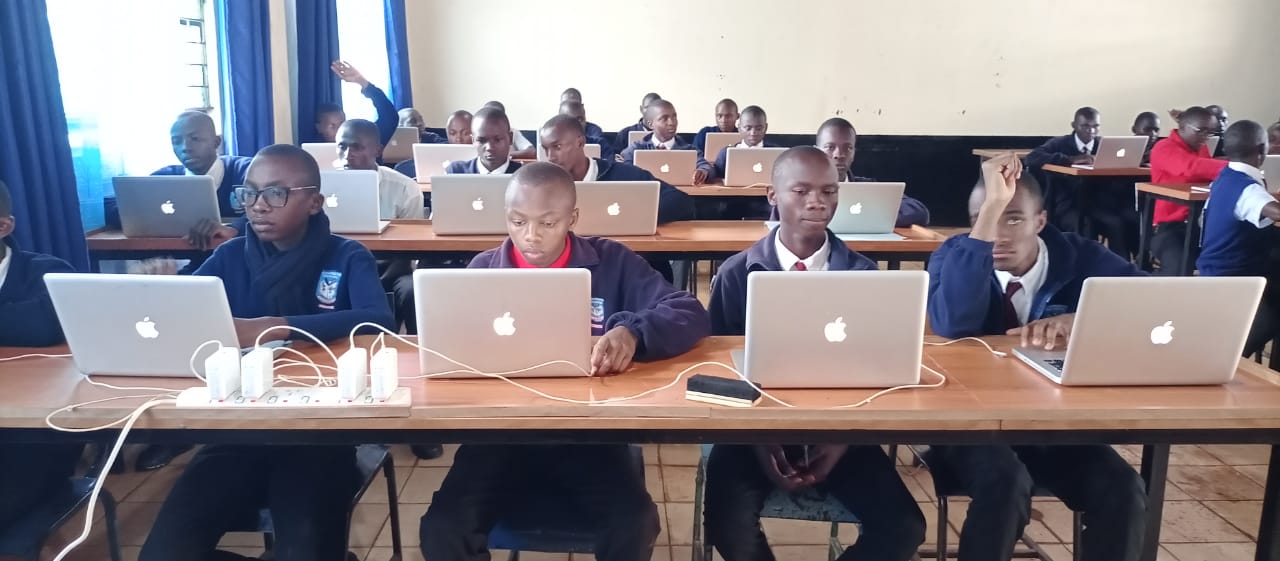
Every year, companies upgrade thousands of high-performing laptops on routine 3-to-4-year refresh cycles. At Telesky a BPO call center working with computer systems on a large scale, we are constantly upgrading to meet new more advanced needs for our systems and clients. With this constant hardware updates, we understand the environmental waste risk at hand. Left idle, these devices represent wasted potential because they can still do more. Reimagined through a circular economy lens, they become engines of both educational opportunity and environmental renewal. We view responsible lifecycle management of these equipment not as a burden, but as a positive cycle of value. In Kenya we have schools that happen to be underserved. With the rise of digital literacy being an important aspect of education today, these schools find it challenging to meet these needs. To ensure laptops become daily teaching tools rather than locked away trophies, we invest directly in educator confidence.
Through our foundation: Telesky Foundation we get to give our computers a second chance at life while getting to help communities, schools and students that need these equipment. Not all laptops are created equal. Budget consumer laptops sold in retail stores are designed for light personal use and they rarely survive the demands of a busy, under resourced school where a single device may be shared by dozens of students every week, without the right hardware durability, ongoing educator support these devices can quickly end up broken. Yet computers originally engineered for demanding corporate environments and field work, are built to endure giving a high power retired corporate laptops additional years in a classroom while dramatically reducing the carbon footprint and raw materials required to manufacture new electronics.
In our pursuit of serving the community we remain committed to upholding the highest standards of quality ensuring that our work consistently aligns with relevant ISO standards. Before a donated laptop ever reaches a school, it undergoes certified data erasure to protect donor privacy, thorough hardware diagnostics, battery renewal, and pre loading with lightweight, offline ready educational software. The result isn’t a “hand me down” it is a rugged learning tool engineered for years of active classroom service.
Sustainable digital inclusion happens when corporate responsibility, smart engineering, and human empowerment meet.
Whether you are an IT leader planning a hardware refresh cycle or a supporter investing in educator training, you can help turn retired technology into thriving classrooms.
Ready to give your organization’s retired laptops a second life or help train the teachers who bring them to life? Partner with us today at https://foundation.telesky.co.ke/ to build classrooms that are connected, resilient, and built for the future.


